
Instant Estimates
Calculate with a clear combined rate and regional breakdown from the included reference directory.
Estimate sales tax, VAT, and GST for supported reference locations—then use practical guides to understand what the number means.
Enter amount: USD 250.00
Region: New York, New York (10001)
Total with tax: $272.198.875% New York combined rate
Full calculatorSales Tax Calculator is published by Egebit Limited for iPhone, iPad, and Android. Use the official store listings below to install it.
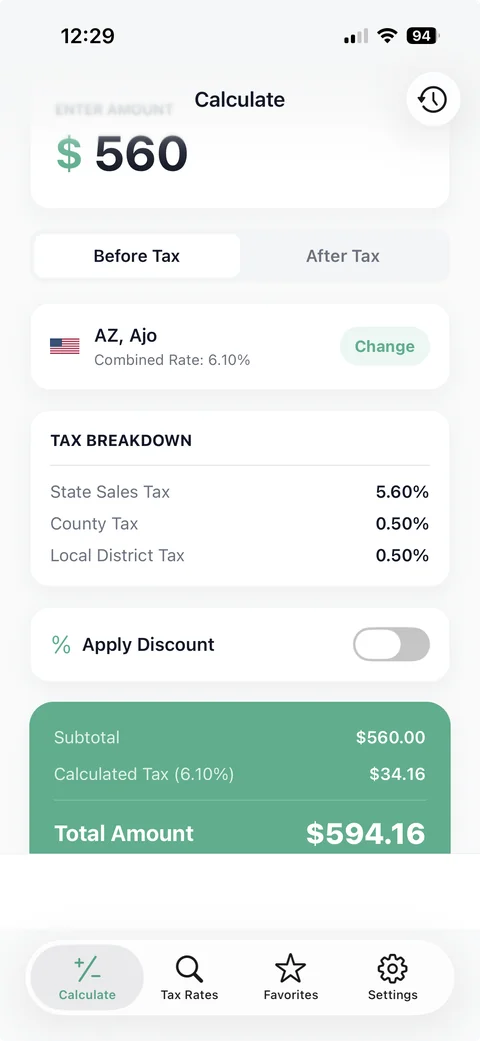
Use focused calculators for the estimate, then move into researched guidance when a tax decision needs more context.
Calculate with a clear combined rate and regional breakdown from the included reference directory.
Compare supported US, Canadian, European, and Asia-Pacific reference locations.
See state, county, city, municipal, and special regulatory tax zones in seconds.
Start from a final total to isolate tax and net amounts with a single click.
Use the included regional directory to compare supported locations and combined rates.
Calculations stay locally in your browser without requiring an account or sending form data to a server.
Choose a supported location and get a transparent breakdown. Currency labels update with the selected region and calculations stay in your browser.
Base tax 6.25%
Local tax 2%
Combined rate 8.25%
Total with tax: $1,082.50Find the combined tax rate for a supported city or postal code.
Open toolCompare tax rates across multiple regions side by side.
Open toolKnow the total? Calculate the original pre-tax amount.
Open toolPlan upcoming filing dates for supported US jurisdictions.
Open toolA practical 2026 guide to sales tax nexus, registration, sourcing, product taxability, filing, and marketplace sales in the United States.
Determine sales tax nexus using physical presence, state revenue definitions, marketplace records, threshold timing, and a documented registration decision.
Determine SaaS customer location with user evidence, state-specific sourcing rules, multistate allocation, billing controls, and a worked subscription example.

Handle shipping tax on mixed carts with a New York allocation example, free-shipping checks, discount scenarios, refunds, and a practical checkout test plan.

Learn why an active sales tax account may still need a return with no sales, and check exempt sales, marketplace receipts, use tax, and account closure.

Understand IOSS for US sellers: eligible consignments, EU intermediaries, marketplace orders, monthly VAT reporting, and the separate July 2026 customs duty.
The calculator is designed for fast reference checks. These steps explain what the result means, where its limits begin, and when to verify an answer with an official source.
Start with the amount before tax when you need to add sales tax, VAT, or GST to a price. Use the reverse calculator when the amount already includes tax and you need to estimate the original price and tax component. Keeping those two questions separate prevents the most common calculation mistake.
Choose the destination or jurisdiction that best matches the transaction. Sales tax can include state, county, city, municipal, or special-district components, while VAT and GST systems usually use a national or category-based rate. The displayed breakdown helps you see how the combined estimate was formed.
Use the result for planning, comparison, and checkout testing—not as a filing determination. Product taxability, customer exemptions, marketplace responsibility, sourcing rules, registration status, and effective dates can change the correct treatment. Check the linked guides and current tax-authority guidance before acting on a material transaction.
It applies the combined reference rate stored for the selected location and shows the estimated tax and total. Where the directory contains separate components, the interface identifies the base and local portions. It does not automatically determine whether a particular product, service, customer, or transaction is taxable.
The result is a reference estimate, not a prepared return or official jurisdiction decision. Before filing, reconcile the transaction data in your commerce and accounting systems, confirm the applicable rate and sourcing method, review exemptions and marketplace sales, and follow the instructions published by the relevant tax authority.
No. The calculator uses a curated set of supported reference locations rather than a complete real-time tax database. If your destination is not listed, use the rate lookup and educational guides as a starting point, then confirm the current rule through the appropriate state, provincial, national, or local authority.
They are all consumption taxes, but they are administered differently. US sales tax is generally collected at the retail stage and can vary across overlapping jurisdictions. VAT and GST systems usually collect tax through the supply chain and may allow registered businesses to claim eligible input tax credits.
Standard calculations run locally in the browser and do not require an account. This makes the tool useful for quick price checks without submitting the entered amount as a calculator form. Contact messages and optional analytics are separate features governed by the site’s privacy choices and Privacy Policy.
Start with the review information and official-source links in the relevant Sales Tax Kit guide. Then verify the rate, effective date, threshold, product category, and transaction facts with the responsible authority. Tax holidays, local rate changes, new registrations, and marketplace rules can make a previously correct setup outdated.
Sales Tax Kit is an English-language reference site published by Egebit Limited. It provides browser-based calculators and educational guides researched against official tax authority sources.
Calculations use an included reference directory and stay in your browser. Results are estimates, not legal or tax advice.
Read our editorial policy or use the contact page for corrections, feedback, data questions, and bug reports.
Use the free calculator now, or explore the guides when you need the rules behind the rate.